How to Verify a Plumber in South Africa (and why it matters)
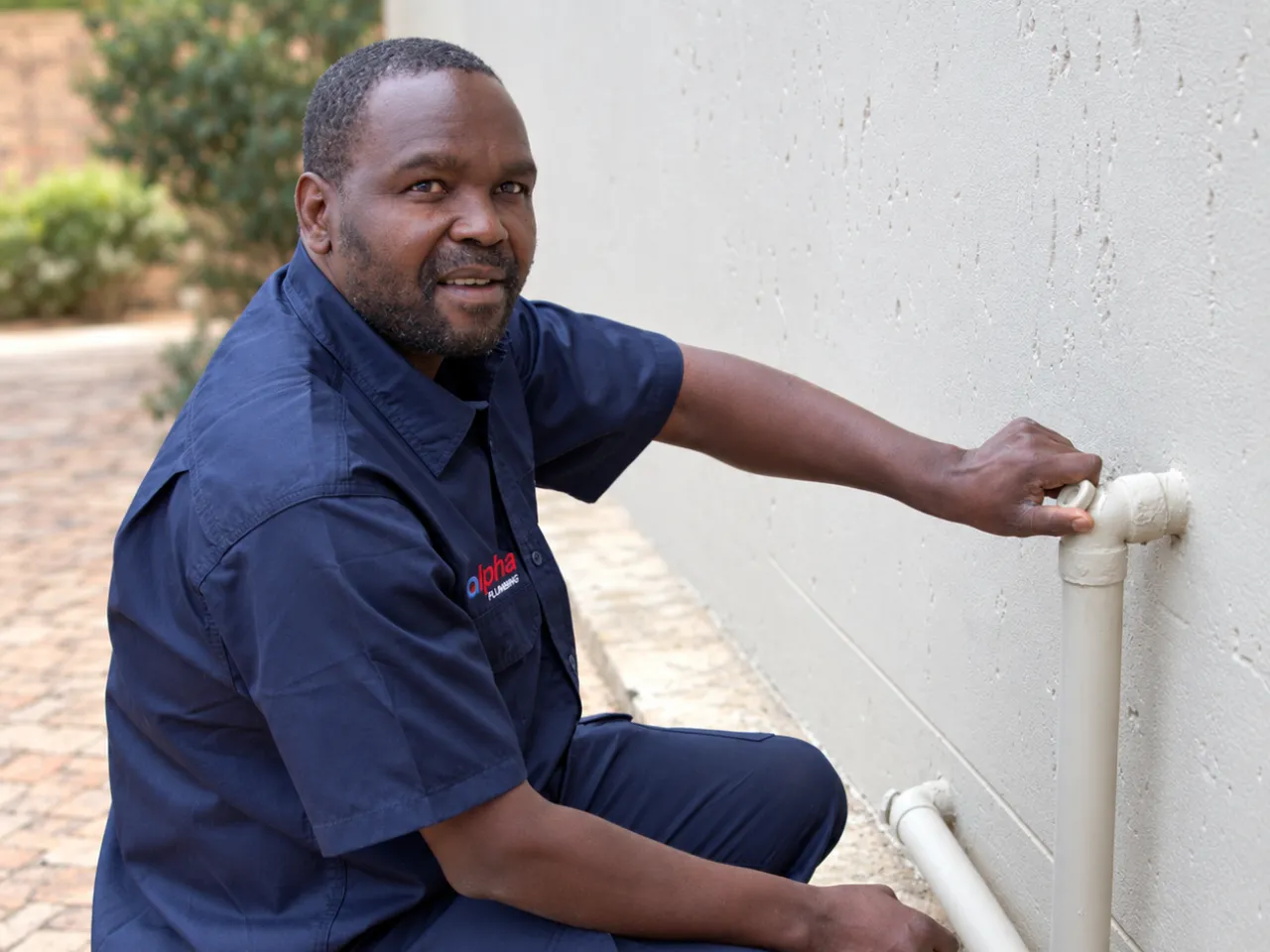
A verbal "yes, I'm registered" is not verification
Almost every plumber you phone will say they're qualified. Some will send a logo on WhatsApp to prove it. Neither of those is verification.
Verification is checking a public register yourself—and in South Africa that takes about a minute if you know which register to check and what the result means.
Having witnessed the often dire consequences of non-compliant plumbing, Alpha Plumbing has put together this verification guide which explains all the jargon: who licences whom, what a Certificate of Compliance actually is and which jobs need one, the steps to verify a plumber, and the real-world consequences of skipping them.
DO PLUMBERS HAVE TO BE LICENSED IN SOUTH AFRICA?
The honest answer is: the structure exists, but the enforcement is uneven — which is exactly why the checking falls to you.
Two bodies matter, and they do different jobs:
PIRB — the Plumbing Industry Registration Board — licenses individual plumbers. A PIRB licence is held by a person, not a company. It is the licence that authorises a plumber to issue a Certificate of Compliance for the work they do.
IOPSA — the Institute of Plumbing South Africa — admits companies as members. Member companies commit to employing licensed plumbers, carrying public liability insurance, and working to a code of practice. IOPSA also offers consumer recourse when a member's job goes wrong.
Searchers use "certified", "registered" and "accredited" interchangeably. The structure is simpler than the vocabulary: the company belongs to IOPSA; the plumber holds a PIRB licence. A company that says it is "PIRB registered" has muddled the two — which is your first small warning sign.
Here’s what it should sound like in practice: Alpha Plumbing is an IOPSA member company with PIRB-licensed plumbers.
What does a PIRB license actually mean?
It means the person has been assessed against the trade's qualification requirements, has passed the board's own assessment, and is accountable to a professional register for the work they sign off. Licensed plumbers earn continuing professional development points to stay current, and their Certificates of Compliance are logged and can be audited.
It does not mean every job they do is perfect. It means there is someone to hold responsible, and a paper trail that exists, when it isn't.
What is a Certificate of Compliance, and which jobs need one?
A Plumbing Certificate of Compliance (CoC) is a document only a licensed plumber can issue to certify that specific work complies with the applicable SANS standards and bylaws. It is the plumber's own declaration, uniquely numbered and logged with PIRB, that they stand behind what they installed.
Most people think a CoC is limited to geysers. It isn't. PIRB's own rules require a licensed plumber to issue a CoC on categories of plumbing, including electric geyser installations and replacements, solar geysers, heat pump water heaters, and the construction, installation, or alteration of any sewer line, above or below ground. If a plumber is unable or unwilling to issue one, warning bells should go off.
Writing in Plumbing Africa, the trade’s industry journal, Alpha Plumbing’s Director of Strategy & Compliance argued in a two-part series on this exact point that “hidden plumbing is where bad habits survive longest. The market notices what bursts. It does not always notice what is lurking and failing beneath the surface.”
Three things to understand about a COC
1. Only a PIRB-licensed plumber can issue one. An unlicensed installer cannot issue a valid CoC—regardless of what you were told.
2. It certifies the work the signatory did or supervised. A CoC "arranged afterwards" by someone who never saw the installation is not compliance. It is a costume
3. Whether the law compels it depends on where you live and what was done. Municipal bylaws differ; for instance, Cape Town's demands a COC on wastewater drainage work, and most insurers expect a COC from a licensed plumber on a geyser claim. Treat a COC as necessary rather than optional, because the people who will ask for it, such as your insurer, a buyer's attorney, or a home inspector, will not be interested in the technicality.
Do you need a plumbing COC to sell a house?
It depends where the house is.
In Cape Town, yes, it is compulsory in terms of the City's Water By-law. No certificate, no transfer.
In Johannesburg and Pretoria, not by bylaw, but potentially by the buyer. Gauteng has no equivalent municipal transfer requirement. That doesn’t preclude a buyer, their attorney, their inspector, or their bond insurer asking for one. Then the electric or solar geyser, or the drainage work you had done by an unlicensed plumber, becomes a problem on their timetable, not yours: a missing certificate is a negotiating point, a delay, or a condition of sale.
Either way, the cheapest time to have a CoC is when the work is done.
How can I verify a plumber?
The steps, in a minute
Ask for the plumber's PIRB licence number. Not the company's—a company cannot be licensed, only a person can; the person who will do the work. A professional gives it without hesitation.
Search it on PIRB's “Verify a Plumber” page: You can search by name or license number. The result shows whether the license is current and whether that plumber may issue a CoC.
Check the company on the IOPSA member directory: Search by name or area.
Ask for proof of public liability insurance. An IOPSA member company carries it. If the answer is "we've never needed it," that is the answer.
When the job is done, verify the CoC itself. PIRB provides a Verify a CoC tool alongside the plumber search. A certificate that cannot be verified is not one; it’s “paperwork theatre.”
If any step fails, stop. Not "ask for a discount"—stop!
Try it on us. Johan Landman, CEO of Alpha Plumbing, holds PIRB license 5572/95, and Alpha Plumbing is an IOPSA member company.
Verifying a plumber - What people get wrong
❌ Checking the company instead of the person. A registered-sounding company name with unlicensed people on the job is the commonest gap. The license belongs to the plumber in your house.
❌ Accepting a screenshot. Registers exist so you can check the source. A screenshot can be anything.
❌ Assuming a big van means a license. Vehicle branding is a marketing decision, not a qualification.
❌ Assuming a directory listing means vetting. Some "verified plumber" directories verify a phone number, nothing more. Check the industry registers, not the advert.
WHAT CAN AN UNVERIFIED PLUMBER COST YOU?
The cost is not the quote, it's what comes after it.
"A property owner chooses the cheaper quote. The job looks fine on the surface. Nothing fails immediately. And for a while, it feels like the right decision. Until it isn't. Because what was bought wasn't value. It was time before failure"
Of course cost is a consideration, but "What does it cost?" is a short-term view that must never be the sole factor. The accompanying questions have a long-term impact with costs that far exceed the initial savings: "who is accountable for this work, what standard is it being installed to, and what risk am I carrying if it fails?" Here is what that risk looks like in a Gauteng home:
🔹Insurance claims questioned. A practical, real-life example: a geyser fails, the ceiling comes down, and the insurer asks who installed the geyser and for the CoC. If the answer is "a man who came recommended on a community group" and there is no certificate from a licensed plumber, the claim is on shaky ground before it starts.
🔹No valid CoC on the work. The geyser and the new sewer line are hidden in the roof or underground—on day one it works and seems fine. Without a certificate from a licensed plumber, there is no guarantee that the work hidden from sight meets regulations, there is no documentation, and no one takes accountability. When things start failing the original plumber has disappeared in the scroll.
🔹Complications when you sell. In Cape Town it’s a prerequisite in Gauteng; the buyer can demand it. In fact, we recommend it. Before buying a property at risk, ask for a CCTV Drain Camera Inspection, evaluate the stormwater drainage (which can hold high hidden costs if faulty), and ensure that the geyser installation meets SANS 10254 regulations.
🔹Unsafe work you can't see. Geysers are pressurised hot-water vessels; sewer lines carry wastewater away from your family. The things a licensed plumber gets right, such as pressure control, safety valves, venting, and falls on a sewer line, are invisible when they're done properly and expensive when they're not.
🔹No recourse. When an IOPSA member company's job goes wrong, there is a body to approach. When an unregistered operator's job goes wrong, there is a WhatsApp number that stops answering.
"“the most expensive plumbing job is rarely the one you paid the most for. It's the one you had to fix twice.” "
Red flags before the work starts
🔺The license number "is in the van" or "with the office".
🔺The company is "PIRB registered" but can't name a licensed plumber.
🔺 The CoC will be "sorted" by someone other than the person doing the work.
🔺 "You don't need a CoC for sewer work" — you do, from a licensed plumber.
🔺 Cash only, full payment upfront, no written quote.
🔺 A quote far below every other quote, with no explanation of what was left out
🔺 Any reluctance to be checked. Professionals expect to be checked.
How do I find a good plumber?
Verification tells you a plumber is legitimate. It doesn't tell you they're good. For that, combine the register check with the pattern in a company's Google reviews — not the score, the pattern — and the quality of the written quote: itemised, scoped, with the guarantee stated.
Also do your Google due diligence: Alpha has several hundred Google reviews from Johannesburg and Pretoria homeowners; read the critical ones first, because how a company answers a complaint tells you more than the average does. Our broader guide on how to choose a plumber you can trust covers the rest.
Alpha Plumbing has served Johannesburg and Pretoria since 1989—an IOPSA member company with PIRB-licensed plumbers. Our license numbers are on the register, our reviews are on Google, and we'd rather you looked at both before you called.
Click here to call or dial 010 001 8364 or contact us—and yes, ask for the license number.
Frequently asked questions
Ask for the plumber's PIRB licence number and search it on PIRB's Verify a Plumber page. For the company, search the IOPSA member directory. Companies are IOPSA members; individual plumbers hold PIRB licences.
Search their name or licence number on PIRB's Verify a Plumber tool. It confirms whether the licence is current and whether that plumber may issue a Certificate of Compliance. It takes about a minute.
Verify first: PIRB licence for the person, IOPSA membership for the company. Then read the pattern in their Google reviews and judge the written quote—itemised, scoped and guaranteed.
Never accept a verbal claim of registration. Verify the licence on the public register, insist on an itemised written quote, confirm public liability insurance, and make sure a Certificate of Compliance from the licensed plumber who did the work is part of the job.
PIRB requires its licensed plumbers to issue a COC on designated work they do, including geyser installations and replacements, solar geysers, heat pump water heaters, and any sanitary drain or sewer work above or below ground. It is not only a geyser document.
In Cape Town, yes: the Water By-law requires a water installation certificate of compliance before transfer. In Johannesburg and Pretoria there is no by-law requirement, but buyers, attorneys and insurers may ask for one — and a missing certificate becomes their leverage.
PIRB licenses individual plumbers and administers Certificates of Compliance. IOPSA is the industry body that companies join; members must employ licensed plumbers and carry public liability insurance.