Skip to content

What’s the best water storage solution for a home in South Africa?
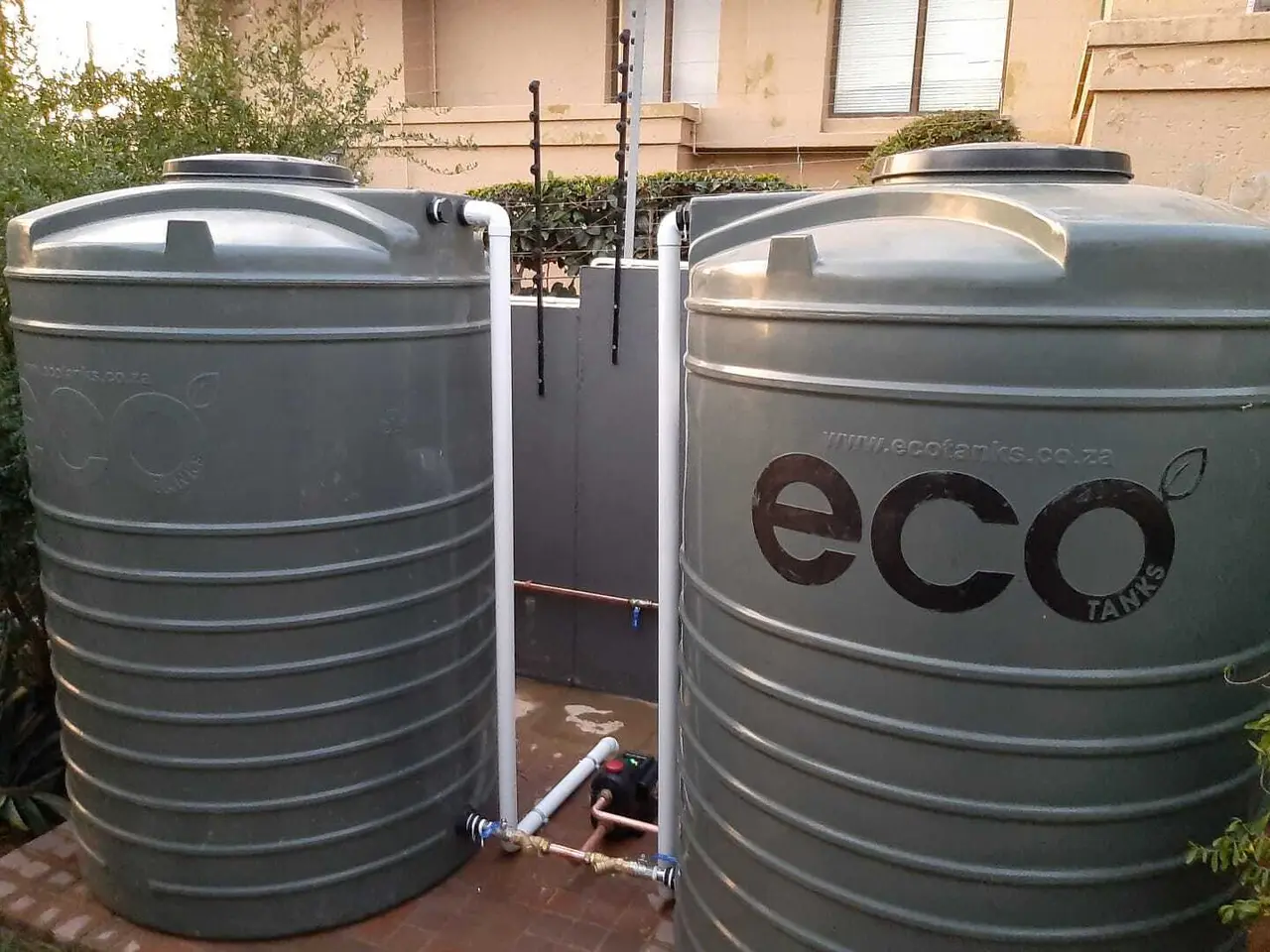
- Water back-up tanks & systems
What’s the best water storage solution for a home in South Africa?

Water Storage Without Regret: Pressure, Size, and Power Explained

South Africans have learned the hard way that running water isn’t guaranteed. Supply throttling, burst mains, and rising demand are increasingly forcing Johannesburg and Pretoria households to actively plan for interruptions.

At Alpha Plumbing, we see two common mistakes: homeowners buy a water tank that’s too small, or they buy a big tank but forget the two things that determine daily comfort — pressure and power. This guide explains the simplest options for home water storage and how to choose without overspending.

The numbers explain why we're running dry —we're using more water than the system can sustainably supply:

"Rand Water reported in early 2025 that Gauteng’s surface water storage was slightly down year over year, while Johannesburg’s daily consumption remained 26% above its target. "

— - Engineering News

McKinsey's research reports that South Africa's annual water demand could reach nearly 18 billion m³ by 2030 against a supply of around 15 billion m³—a shortfall that makes planning ahead a practical household decision.

Want the right water storage setup for your home?
Tell us your suburb, the number of bathrooms, and whether you need pressure during outages.

Start with your goal (not the tank)

When you invest in water backup, you’re really choosing between gravity-fed and pressure-boosted systems:

Often we see a mismatch between the water backup system and the homeowner's expectations. Gravity systems can be brilliant for basic backup, but they won’t always deliver the pressure you’re used to. Pumped systems can feel like normal municipal pressure, but they rely on power.

The simplest way to choose is to start with your goal:

  • Essentials + maximum reliability: gravity-fed (works without power)
  • Comfort + normal pressure: tank + booster pump (ideally with inverter/solar backup)

At Alpha Plumbing, we help people avoid that disappointment by matching the system to daily life: what must still work when supply is off or throttled? This table breaks down the practical differences:

Feature

Gravity-Fed System

Pressure-Boosted System

SetupTank on a stand; water flows naturally.Tank + booster pump for consistent pressure.
PressureModerate; depends on stand height.Strong, stable water pressure across the house.
Energy UseNone – works during loadshedding.Needs power; add inverter/solar for reliability.
MaintenanceLow.Pump servicing required.
Best ForBudget-conscious homes, basic use.Larger homes, multi-bathroom or irrigation needs.

With gravity-fed systems, pressure depends on height. A useful rule of thumb is 10 metres of height ≈ 1 bar — so a short stand often gives flow but not “municipal-style” pressure. If you want strong, consistent pressure across bathrooms, a booster pump is usually the better fit.

Not sure? We’ll confirm whether gravity is enough or if you need a booster pump and power plan.

Why Water backup Matters in Johannesburg and Pretoria

Johannesburg and Pretoria aren’t dealing with a single “water problem” — it’s a mix of ageing infrastructure, high demand, and pressure-management measures that can leave households with low flow or no water at short notice. That’s why more homeowners are treating water backup and water tanks as home infrastructure, not a luxury.

At Alpha Plumbing, we see the difference immediately: a well-planned system doesn’t just store water—it helps you keep essentials running and reduces the stress when supply is interrupted.

Johannesburg had to deal with an estimated 2,300 burst pipes in 2025 contributing to major outages.

In Johannesburg, overnight throttling between 18:00 and 05:00 has been implemented to help the system recover (times can vary by area and measures)

Without backup, you risk empty taps, low pressure, and disrupted routines when outages strike.

"The Vaal Dam moved from around 23% in early 2025 to overflowing later that year. Volatility like that is a clear reminder that water availability can swing fast and why household water backup is no longer "nice to have" — it’s a practical buffer.

How to pick the right tank size

A simple way to size a tank is: people in the home × days you want covered × daily “essential use”.

Rule of thumb (essential use):

  • Conservative essentials (toilets, handwashing, limited washing/cooking): ±50–80L per person per day
  • More comfortable use (more frequent washing, longer showers, appliances): ±100–150L per person per day

Quick examples (essential use):

  • 2 people, 2 days: ±200–320L per day (most homes choose bigger for buffer)
  • 4 people, 2 days: ±400–640L perr day
  • Family home wanting comfort: 2,500L–5,000L+ often makes more sense

At Alpha Plumbing, we make it a rule to size for your reality (work-from-home, kids, garden, outage frequency)—not just the smallest number that “technically works”.

Practical Tips Before You Install

A reliable water backup system is more than “tank + pump”. Plan for future upgrades (like rainwater harvesting or solar), and size the tank for how your household actually uses water — not just the minimum that technically works.

At Alpha Plumbing, we recommend using certified installers and a compliant installation approach so your system is safe, serviceable, and built to last. Ensure that the system you install includes the following:

  • Isolation valves

    Enables servicing components without shutting off the entire system.

  • Bypass / changeover setup

    Allows easy switching between municipal supply and tank supply when needed.

  • Backflow protection

    Protects municipal supply and keeps your system legal and compliant.

  • Sediment filters

    Catches grit before it reaches your pump & plumbing, extending component life.

  • Safe overflow routing

    Directs overflow away from foundations and into an appropriate drainage point.

At Alpha Plumbing, we make sure the system is serviceable — if filters and valves aren’t easy to reach, maintenance gets skipped and problems start. If you have compliance concerns we're available at 010 001 8364  to answer your questions

Power during load shedding (if you choose a booster pump)

A booster pump won’t run without power — but you have options:

  • Inverter + battery sized for your pump and expected runtime
  • Solar + inverter for more independence
  • Manual backup plan (e.g., gravity feed to essentials if your property allows it)

At Alpha Plumbing, we always recommend matching the pump to the home (and not oversizing), because the right sizing reduces noise, power draw, and wear.

The Alpha Plumbing Promise

At Alpha Plumbing we’ve been installing tanks, booster pumps, and full water backup systems across Johannesburg and Pretoria for over 30 years. Our focus is practical: correct sizing, safe changeover, filtration, and neat installation — so you get reliable water when the supply is interrupted.

We do the plumbing. You do uninterrupted life.

Call us now to discuss your needs

FAQs Water Storage for Homes in Johannesburg & Pretoria

Still have questions about water backup? You’re not alone. These are the most common questions we get from Johannesburg and Pretoria homeowners planning their first water tank or pump system.

For a family of four, 2,500 L covers roughly 1–2 days of essential use (toilets, basic washing, limited cooking). If you want showers and appliances to run normally during outages, go 5,000 L+.

If you want pressure similar to municipal supply across multiple bathrooms, choose tank + booster pump (add inverter/solar for loadshedding). If reliability with no power is your priority and you can live with lower pressure, gravity-fed works.

Not by itself. A booster pump needs power, so you’ll need a UPS/inverter + battery (or solar) sized for the pump’s startup load and the runtime you want. If you want a setup that still works with zero power, consider a gravity-fed (or hybrid) plan.

At minimum: a sediment pre-filter before the pump, a screen or cartridge before the house line, and a backflow preventer to protect municipal supply. This protects appliances and keeps your installation compliant.

Yes—provided it’s installed to SANS standards with PIRB-compliant workmanship and respects local bylaws (uses proper backflow/air-gap protection, safe overflow routing, and safe pump electrics)

Use a level, reinforced base (or a certified stand for gravity systems). Keep runs short and direct to reduce friction losses, and ensure service access for filters, valves, and pump maintenance.

Choose the right-sized pump, add a pressure/accumulator vesseland include anti-hammer measures and proper mounting. Correct sizing and pipe supports matter more than brand stickers.

Call Us: 010 001 8364